


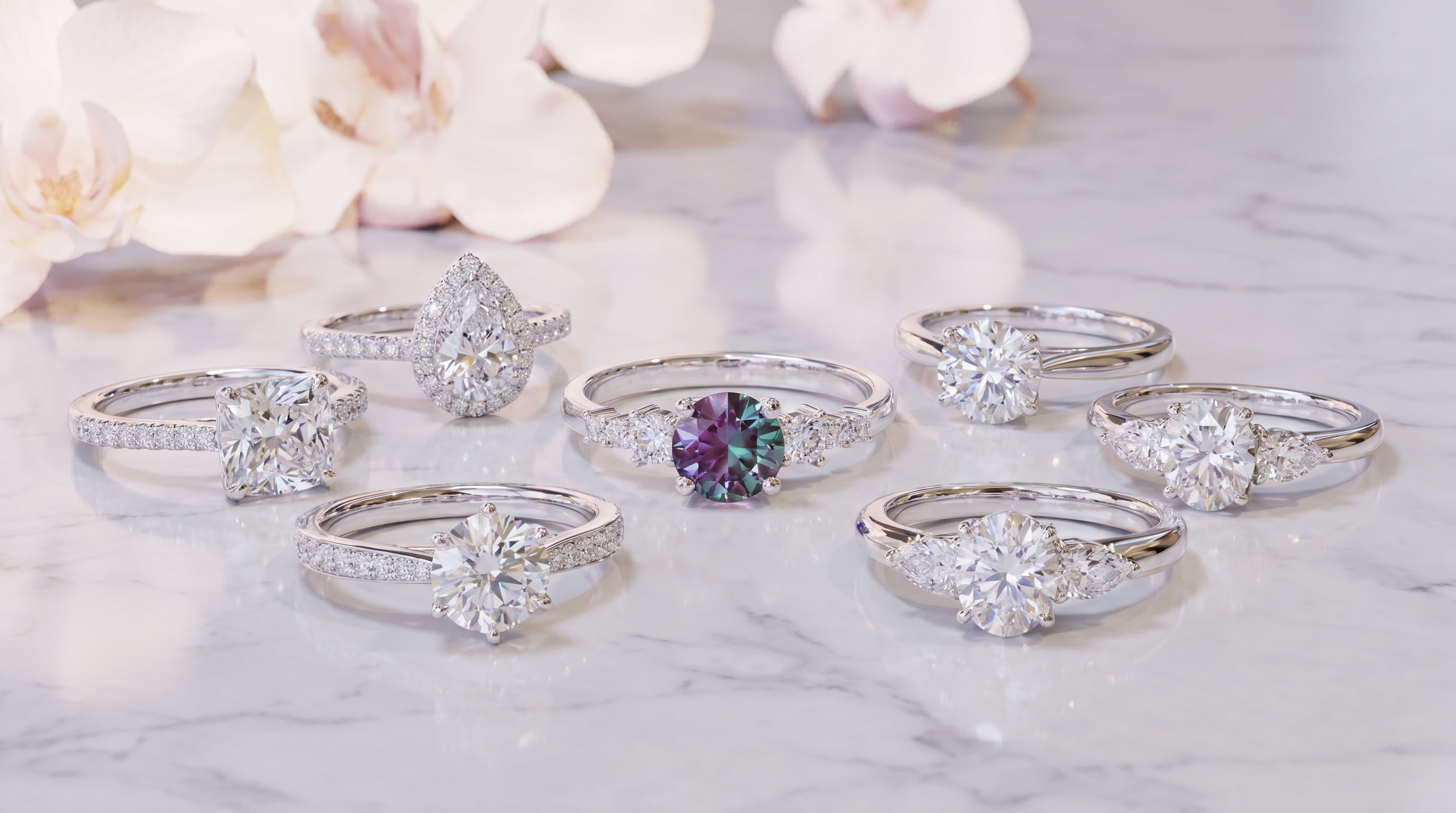
You've been searching for a natural alexandrite engagement ring, and you already know this isn't a simple purchase. This is one of the rarest gemstones on earth—a stone that glows vivid green under afternoon sunlight and melts into a deep purplish-red the moment you step into candlelight. That color-change phenomenon is real, it's breathtaking, and it comes with a price tag that stops most buyers cold. Before you spend $15,000 to $50,000 per carat, you need the full picture.

Fine natural alexandrite is rarer than diamonds. The original Russian deposits in the Ural Mountains are largely exhausted. Modern sources in Brazil, Sri Lanka, and East Africa produce limited supply, and gem-quality stones over one carat are genuinely scarce. We've helped over 250,000 customers navigate exactly this kind of decision—and we'll walk you through everything: what makes a stone worth buying, how to avoid fakes, what vintage and designer pieces can teach you, and which alternatives deliver spectacular results in 2026.
What to Know Before Buying a Natural Alexandrite Engagement Ring
Before buying a natural alexandrite engagement ring, understand its defining feature: a dramatic color change from daylight green to incandescent red. Fine natural stones are exceptionally rare, so prioritize a strong, vivid color shift and always demand independent gemological certification to verify authenticity and protect your investment.
The alexandrite stone has a remarkable origin story. In the 1830s, miners searching for emeralds in Russia's Ural Mountains discovered crystals that looked green in daylight but glowed red under their campfire at night. Named after the future Czar Alexander II, the gem became a sensation almost immediately. Those original deposits are now depleted. Today's supply comes from Brazil, Sri Lanka, and East Africa—and even combined, these sources can't meet demand for truly fine material.
The science behind the color shift lies in chromium. Alexandrite is a variety of chrysoberyl containing trace amounts of chromium—the same element responsible for the red in rubies and the green in emeralds. This unique chemistry absorbs specific wavelengths of light. In balanced daylight, your eye picks up the green transmission. Under warm incandescent light, the red takes over. The result feels almost supernatural. It's not a trick of the setting or the cut—it's pure geology.
Here's the thing: the market is highly nuanced. A stone can be technically natural but lack the vivid color shift that makes the gem famous. For a deeper dive into grading criteria, our Alexandrite Engagement Ring Buying Guide 2026 covers how to evaluate these phenomenal gems in detail.
Key Factors in Choosing Your Alexandrite Stone
The most crucial factor in choosing an alexandrite stone is the percentage of color change, ideally reaching 80 to 100 percent. Evaluate clarity, cut quality, and durability carefully—alexandrite ranks 8.5 on the Mohs scale, which means it requires more care than diamonds or moissanite during daily wear.
Evaluating an alexandrite ring means looking past carat weight and focusing on optical performance. Gemologists assess the strength and purity of the color transition. A stone that shifts from muddy brownish-green to dull grayish-purple holds far less value than one that snaps from crisp teal to rich raspberry red. A color change of at least 30 percent is the baseline for a quality stone. Investment-grade pieces hit 80 to 100 percent.
Clarity matters enormously. Alexandrite forms with fewer inclusions than emeralds, but finding an eye-clean stone with a strong color change is still rare. Visible inclusions—especially those disrupting the path of light—diminish brilliance and weaken the color shift. Cutters face a unique challenge because alexandrite is pleochroic, showing different colors from different angles. The cutter must orient the raw crystal precisely to maximize the face-up color change, often sacrificing carat weight to achieve the best optical result.
Durability is non-negotiable for a ring worn every day. At 8.5 on the Mohs scale, alexandrite resists scratching well—but it's softer than sapphire (9), and noticeably softer than moissanite (9.25) and diamond (10). A hard knock against a granite countertop can chip the stone, particularly in an exposed prong setting. You'll need to be deliberate about removing your ring during heavy manual tasks or intense workouts.
| Feature | Natural Alexandrite | Lab-Grown Alexandrite | Premium Moissanite |
|---|---|---|---|
| Origin | Earth-mined (Extremely Rare) | Laboratory Created | Laboratory Created |
| Color Shift | Green to Purplish-Red | Green to Purplish-Red | None (Brilliant White/Colored) |
| Mohs Hardness | 8.5 | 8.5 | 9.25 - 9.5 |
| Brilliance/Fire | Moderate | Moderate | Exceptional (Higher than Diamond) |
| Price Per Carat | $15,000 - $50,000+ | $300 - $1,200 | Highly Affordable |
Price Ranges and True Value in 2026
In 2026, a high-quality natural alexandrite engagement ring costs between $15,000 and $50,000 per carat. This extreme pricing leads many couples to pivot toward lab-grown alexandrite or premium moissanite—alternatives that maximize visual impact, durability, and budget without compromise.
The financial reality hits hard. A one-carat natural stone with a vivid color change and excellent clarity commands $20,000 to $30,000. Stones over two carats multiply exponentially in price per carat, often rivaling the cost of a luxury vehicle. You're paying a massive premium for geological rarity—not necessarily for beauty or wearability.
In 2026, the average engagement ring spend sits around $7,300. At that budget, a buyer seeking natural alexandrite would likely settle for a stone under half a carat, or a larger stone with heavy inclusions and a weak, muddy color shift. That's a difficult value proposition: compromising on visual beauty just to claim natural origin.
And honestly? This is exactly why the market has shifted so dramatically toward alternatives. Lab-grown alexandrite delivers the same chemical composition and optical magic for a fraction of the cost. But for buyers who want maximum durability, breathtaking sparkle, and a substantial center stone, moissanite has become the standout choice. With a refractive index of 2.65–2.69 (compared to diamond's 2.42) and a dispersion of 0.104—2.4 times that of diamond—moissanite throws off rainbow fire that catches light from across the room. To understand the exact financial breakdown, read our guide on Moissanite vs Diamond Price: What You're Really Paying For.
How to Spot Quality and Avoid Fakes
To spot a high-quality real alexandrite engagement ring, look for a vivid, muddy-free transition between green and purplish-red. Always request a GIA certificate—without it, you risk overpaying for synthetic corundum or glass simulants that flood the market under misleading labels.
The extreme value of natural alexandrite makes it a prime target for imitation. The market is saturated with stones that claim to be natural but are lab-grown, or worse, cheap simulants. Your first line of defense is independent certification. Never purchase a high-value colored gemstone without a report from the Gemological Institute of America (GIA). That certificate will explicitly state whether the stone is natural or synthetic and detail any treatments it has undergone.
Learn to evaluate the stone under the right conditions. A common mistake is assessing it under the mixed lighting of a jewelry store. You need to see the gem in pure natural daylight to assess its green hue, then in isolated warm incandescent light to see the red. Watch for stones that look overly dark or nearly black in one lighting condition—a top-tier stone stays bright and jewel-like across the full spectrum.
Be wary of bargains. A two-carat natural alexandrite listed online for $2,000 is almost certainly a fake. The most common simulants are color-change synthetic sapphires (corundum). These do shift color, but the transition runs from grayish-blue to muted purple—lacking the crisp green and vibrant red of true alexandrite. For a comprehensive look at navigating these pitfalls, our article on Real Alexandrite Rings for Sale: The Complete Buying Guide is essential reading.
Vintage and Designer Inspiration
Vintage alexandrite engagement rings offer historical charm, often featuring intricate milgrain and halo settings that protect the rare center stone. High-end designer pieces—like the natural alexandrite rings Tiffany and other heritage brands have produced—showcase the gem's legacy and inspire modern couples seeking heirloom-quality designs.
There's an undeniable romance attached to vintage alexandrite engagement rings. Because the stone was highly prized during the late Victorian and Edwardian eras, you can occasionally find antique pieces featuring Russian alexandrite set in elaborate platinum or yellow gold mountings. These vintage settings typically use bezel or heavy prong designs surrounded by diamond halos—not just for aesthetics, but as a protective bumper for the softer colored gemstone, ensuring it survived decades of wear.
Luxury jewelry houses have long recognized the prestige of this gem. The natural alexandrite rings Tiffany and other heritage brands have created over the decades are considered museum-quality masterpieces, often featuring the stone in a prominent solitaire setting or flanked by substantial diamond side stones to emphasize its rarity. These designer pieces set the standard for how to style such a phenomenal gem.
Today, many couples aim to capture that bespoke feel by curating an alexandrite engagement ring set—pairing a color-change center stone with a contoured, diamond-studded wedding band. The brilliant white sparkle of accent stones highlights the deep, shifting colors of the alexandrite beautifully. If you love the look that natural alexandrite rings vintage styles provide, modern jewelers recreate those intricate milgrain-detailed settings using lab-grown alexandrite or vibrant colored moissanite, delivering the full aesthetic without the astronomical antique price tag.
Our Top Recommendations for Brilliant Alternatives
While natural alexandrite offers geological rarity, our premium moissanite and lab-grown rings provide unmatched daily durability, ethical sourcing, and spectacular brilliance. These top recommendations deliver breathtaking fire and substantial size for a fraction of a rare colored gemstone's price—backed by our lifetime warranty and GRA certification.
We understand the desire for a ring that stands out. The color-changing magic of alexandrite is beautiful—but the reality of its cost and fragility leads many savvy couples to seek alternatives that offer more visual impact, better durability, and absolute ethical certainty. At Awareness Avenue, we've helped over 250,000 customers find their perfect piece, and we craft every ring to be worn with total confidence every single day.

For those captivated by the color-change effect but wanting an accessible, flawless piece, The Martha is a revelation. Featuring a 0.8ct round cut alexandrite, this ring delivers the enchanting green-to-red transition in a classic, elegant setting—the visual magic of the stone without the six-figure anxiety.

If you prefer a more elongated, finger-flattering shape, The Alvana is a breathtaking choice. This 1ct pear cut alexandrite engagement ring combines the unique optical properties of the gem with a sophisticated, modern silhouette. The pear cut maximizes surface area, giving you a larger visual footprint and a stunning display of shifting hues.
But here's where it gets interesting: for buyers who decide that maximum brilliance and extreme durability are the top priorities, moissanite is the undisputed champion. With a Mohs hardness of 9.25 and a dispersion that's 2.4 times that of diamond, moissanite throws off a fiery, rainbow scintillation that catches light from every angle—in direct sunlight, it's genuinely show-stopping.

Consider The Camilla - Solitaire Moissanite Ring. This piece strips away every distraction, letting the sheer, unadulterated sparkle of the moissanite center stone take center stage. At 9.25 Mohs hardness, your ring will look just as pristine on your golden anniversary as it does the day you say yes. Every stone is GRA certified and ethically lab-created—no mining, no compromise.

If you love the vintage, multi-stone looks often seen in antique alexandrite pieces, The Opaline - Three Stone Moissanite Ring delivers that substantial, finger-spanning coverage. The three-stone design represents your past, present, and future—and the wall of light it produces is impossible to ignore.
Finally, for those who crave a pop of color with the superior durability of moissanite, The Juliana features a spectacular 2ct oval green moissanite. It gives you that rich, vibrant daylight hue of an alexandrite, paired with the intense fire and scratch resistance that only moissanite can provide. Explore all of these designs in our Engagement Rings collection or browse our Best Sellers to see what 250,000+ customers are choosing right now.
Frequently Asked Questions
Navigating the complexities of rare gemstones naturally brings up questions about wearability, cost, and alternatives. Here are the most frequently asked questions about alexandrite engagement rings to help you make a confident, informed decision for your forever piece.
Is a real alexandrite engagement ring durable enough for daily wear?
Yes, but it requires mindfulness. Alexandrite ranks 8.5 on the Mohs scale, making it highly resistant to scratching. It isn't as tough as diamond or moissanite, though. Remove your ring during heavy manual labor, weightlifting, or when using harsh cleaning chemicals to prevent accidental chipping or damage to the setting.
Why are natural alexandrite rings so expensive?
The high cost is driven entirely by extreme geological rarity. Finding a natural chrysoberyl crystal with the exact trace amounts of chromium needed to produce a strong color change is genuinely uncommon. Factor in the need for high clarity and a size over one carat, and the supply is nearly non-existent—driving prices to $15,000–$50,000+ per carat.
How does moissanite compare to an alexandrite ring?
Moissanite and alexandrite serve different aesthetic desires. Alexandrite is prized for its color-changing phenomenon and rarity, offering a subtle, moody beauty. Moissanite is prized for its explosive brilliance (refractive index 2.65–2.69, versus diamond's 2.42), exceptional durability at 9.25 Mohs, and affordability. Moissanite sparkles significantly more than alexandrite and withstands decades of daily wear far better.
Can I clean my alexandrite ring in an ultrasonic cleaner?
It's generally not recommended. While the stone is hard, ultrasonic vibrations can worsen microscopic inclusions or loosen the setting. The safest method: soak the ring in lukewarm water with a few drops of mild dish soap, gently scrub with a soft-bristled toothbrush, and dry with a lint-free cloth.
Final Advice for Your Forever Ring
Choosing your forever ring means balancing emotional resonance with daily practicality and budget. If the extreme cost of a natural alexandrite engagement ring feels restrictive, exploring premium moissanite allows you to secure a breathtaking, durable ring that beautifully represents your unique love story—without financial regret.
A natural alexandrite engagement ring is undeniably a marvel of nature. Its shifting colors tell a beautiful story of transformation and rarity. The reality of purchasing one in 2026, though, involves navigating astronomical prices, a market full of simulants, and the need for cautious daily wear. You don't have to compromise your financial future or your peace of mind to wear a spectacular piece of fine jewelry.
Expanding your horizons to include lab-grown options and premium moissanite puts you in control. You choose a ring with a massive, flawless center stone, brilliant fire that outperforms diamond by GIA standards, and the durability to survive whatever life throws your way—backed by our lifetime warranty, secure checkout, and 30-day returns. Browse our Moissanite Engagement Rings and our curated Affordable Engagement Rings collection. Your dream ring is waiting—and it's more brilliant than you ever imagined.

Leave a comment
This site is protected by hCaptcha and the hCaptcha Privacy Policy and Terms of Service apply.